Every outbound team already "pays" for manual dialing. The cost just doesn't show up as a single line item on the budget — it's buried inside agent salaries, missed follow-ups, and campaigns that quietly underperform.
Once you break that cost down into its real components — dialing time, wrong numbers, follow-up failures, and lost opportunities — the case for automated dialing stops being a nice-to-have and becomes basic math.
Let's go through each cost driver, then run the numbers.
Manual dialing isn't just "dialing." Each attempt includes:
None of that involves a customer. It's pure overhead.
| Step | Average time per call |
|---|---|
| Look up + dial | 15–20 sec |
| Ring / wait time | 20–30 sec |
| No-answer / voicemail handling | 10–15 sec |
| Manual disposition logging | 15–20 sec |
Add it up and a manual agent can easily burn 60–85 seconds per attempt before ever reaching a live conversation — and 40–60% of attempts never connect at all.
An automated dialer removes the dialing, ringing, and lookup steps entirely. Numbers are queued and dialed automatically, unproductive calls (busy, no-answer, voicemail) are filtered out, and agents are only dropped into calls once a real person is on the line. That alone can cut wasted time per attempt by more than half.
Every contact list has some percentage of bad data: disconnected numbers, wrong contacts, numbers that have been reassigned or ported. Manually, each of those still costs a full dial-and-wait cycle before the agent even knows it was a dead end.
At scale, this adds up fast:
Automated dialing systems can detect invalid, disconnected, or non-dialable numbers and skip or flag them automatically — often before an agent is ever involved — instead of burning agent minutes discovering the number was bad in the first place.
In manual workflows, follow-ups depend on someone remembering to make the next call, at the right time, with the right context. In practice:
Studies on lead response consistently show that contact and conversion rates drop sharply the longer a follow-up is delayed — and manual processes are where that delay creeps in.
Automated dialing platforms like SIP Caller can schedule callbacks automatically, retry unanswered numbers on a defined cadence, and carry call history and disposition data forward — so follow-up stops depending on an individual agent's memory or discipline.
This is where the first three costs compound. Every minute lost to dialing overhead, every wrong number dialed, and every follow-up that slips through the cracks is a conversation — and a potential outcome — that never happens.
| Manual Team (10 agents) | Automated Team (10 agents) |
|---|---|
| ~5 live conversations/hour/agent | ~15–18 live conversations/hour/agent |
| ~400 conversations/day | ~1,400+ conversations/day |
| Follow-ups depend on manual tracking | Follow-ups scheduled and retried automatically |
If your conversion rate is 10%, the difference between 400 and 1,400 daily conversations is roughly 100 additional conversions per day — sales closed, payments collected, appointments confirmed, depending on your use case.
That gap doesn't show up as a cost on a P&L. It shows up as revenue that was never captured.
Here's how the math typically works out. These examples use conservative, mid-range assumptions — your own numbers may be better.
You don't need a case study to estimate your own numbers. A simple ROI model looks like this:
Wasted time per manual call ≈ dial time + ring time + wrong-number time + logging time
Agents needed (manual)   = target conversations ÷ conversations per agent per hour (manual)
Agents needed (automated) = target conversations ÷ conversations per agent per hour (automated)
Monthly savings = (Agents needed manual − Agents needed automated) × cost per agent
Annual ROI = (Annual savings − platform cost) ÷ platform cost × 100
If you want the exact numbers for your own team instead of estimating by hand, our ROI Calculator runs this calculation for you — just enter your agent count, connection rate, average cost per agent, and talk time.
Manual calling doesn't fail loudly. There's no single moment where it visibly breaks. It just quietly costs more, converts less, and lets follow-ups slip — every single day, in amounts that rarely get reviewed line by line.
Automated dialing doesn't just make agents faster. It removes wrong numbers before they waste anyone's time, makes follow-up a system property instead of a personal habit, and turns idle dialing time back into live conversations.
Once you add up dialing time, bad numbers, missed follow-ups, and the opportunities lost in between, the question isn't really "can we afford to automate dialing?" It's "how much is manual dialing already costing us, unnoticed?"
Curious what the True Cost of manual calling looks like for your team specifically?
👉 Try the ROI Calculator and get your savings estimate in under a minute, or sign up for a free trial and see automated dialing in action.
Have questions about your specific use case? Our team is happy to help you run the numbers.
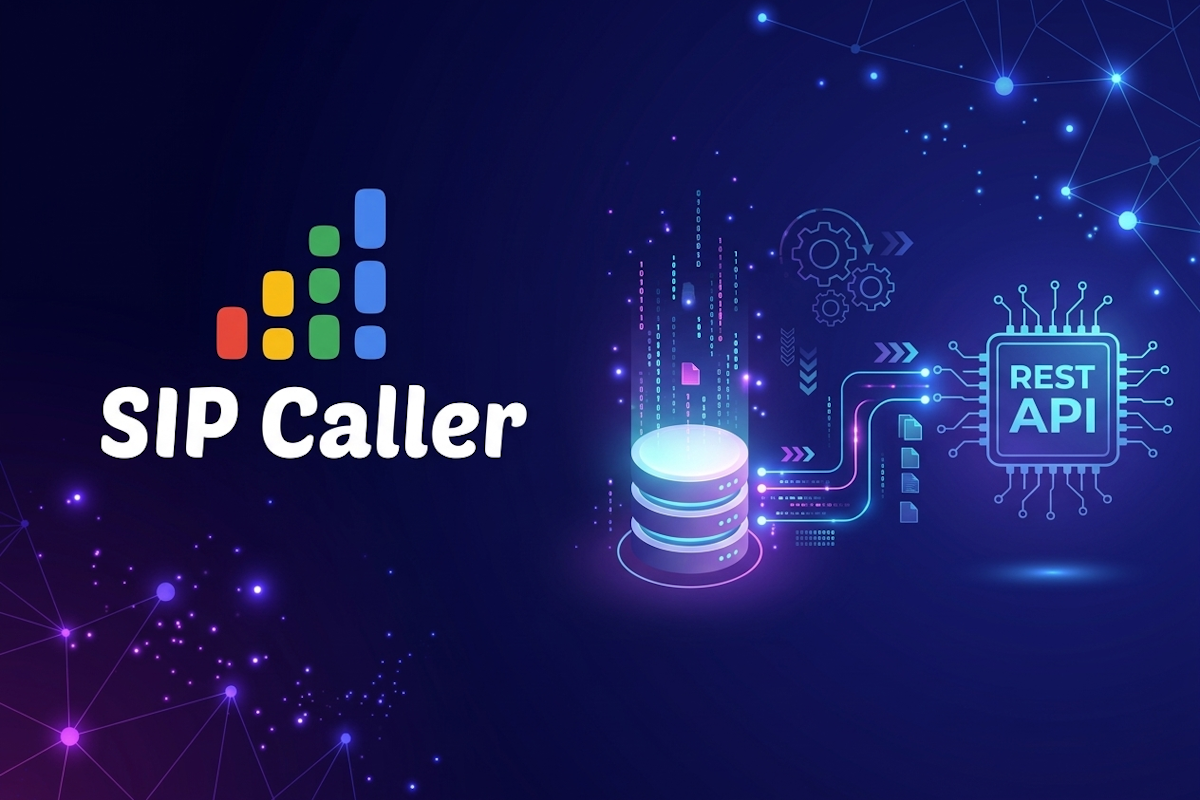
A step-by-step example of connecting SIP Caller with an external database. A short Python script reads tomorrow's appointments from a PostgreSQL table, creates a campaign from a template, loads the numbers with personalized variable values, and activates it through the REST API. A cron job then runs it every day, so your campaigns are fed without any manual work.

Government agencies are under constant pressure to communicate quickly, clearly, and efficiently with large populations. Whether it’s notifying citizens about road closures, coordinating emergency responses, reminding residents about appointments, or improving tax collection efforts, timely communication is critical. Traditional communication methods such as manual phone calls or printed notices are often too slow and resource-intensive. This is why many public organizations are adopting automated outbound dialing solutions like SIP Caller to streamline citizen outreach and improve response times. In this article, we explore how government agencies can use predictive and power dialers to improve public communication and citizen engagement.

Missed appointments are a major challenge for healthcare providers. No-shows lead to underutilized resources, lost revenue, and delays in patient care. In high-demand environments, even a small percentage of missed appointments can significantly impact operations. Fortunately, automated call campaigns offer a powerful solution. With platforms like SIP Caller, healthcare organizations can proactively communicate with patients, reduce no-show rates, and ensure continuity of care—all while minimizing administrative workload.