We’re excited to announce new REST API capabilities in SIP Caller that give you even more control over your outbound campaigns directly from your own systems.
These new endpoints make it easier than ever to automate campaign management, streamline workflows, and fully integrate SIP Caller into your operational processes.
Let’s take a look at what’s new.
Until now, when duplicating a campaign via the API, the new campaign inherited the original name.
Now, you can define the campaign name directly during duplication.
This improvement allows you to:
Imagine you generate daily campaigns:
You can now duplicate a base template campaign and assign the name dynamically in a single API call.
We have introduced new endpoints that allow you to transition campaign states programmatically.
You can now:
This gives you full operational control from your external systems, such as:
This makes SIP Caller even more powerful in enterprise automation environments.
The delete functionality is now fully enabled through the REST API.
You can programmatically:
If you generate temporary or automated campaigns, you can now:
With these new methods, you can now fully automate the campaign lifecycle:
All without manual intervention.
These new endpoints are ideal for:
If you are already using our REST API, these additions will significantly enhance your integration capabilities.
The API documentation has been updated with the new endpoints, including request examples. Make sure to review it to start implementing these improvements today.
SIP Caller continues to evolve to provide powerful automation tools for modern outbound communication.
If you’re not yet leveraging our REST API, now is the perfect time to start.
👉 Log in to your SIP Caller console and explore the new API capabilities.
👉 Need help integrating? Contact our team — we’ll be happy to assist you.
At SIP Caller, we remain committed to helping you scale smarter, automate more, and maximize efficiency in your outbound campaigns.

Black lists and contact lists can now be fully managed through the SIP Caller REST API. You can create, edit, and delete lists, and add or remove their numbers and variable values, directly from your own systems. A new endpoint also loads every number from a contact list into a campaign with a single request. Keep opt-outs in sync with your CRM, refresh contact lists on a schedule, and provision new accounts end-to-end without a single manual step in the console.

This release brings three meaningful improvements to SIP Caller. The list of campaigns in the Dashboard, Campaigns menu, and Reports menu now shows a detailed status icon explaining exactly why an active campaign isn't making calls. Campaigns can now also be assigned a Priority (High, Normal, or Low), so your most important campaigns get access to calling capacity first. And thanks to internal architectural improvements, campaigns now start making calls within 5 seconds of activation, down from up to 30 seconds previously.
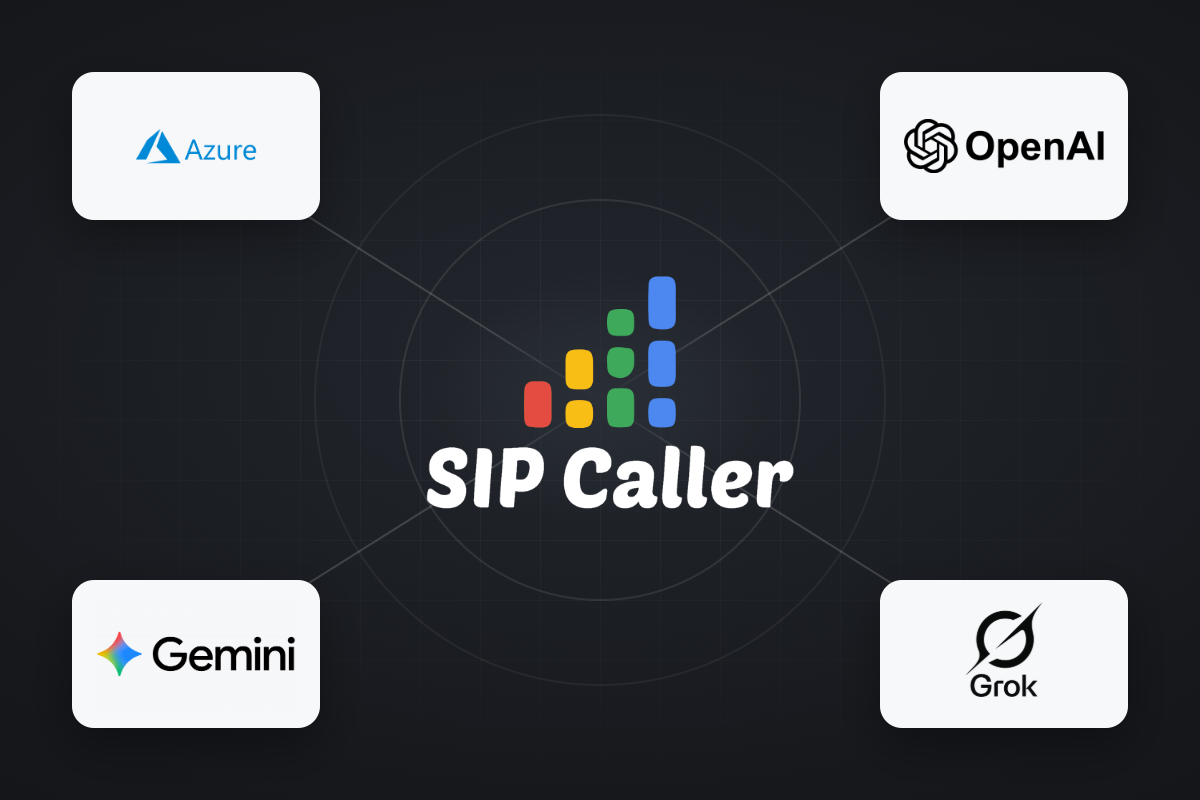
OpenAI and Grok are now available as AI Providers in SIP Caller, joining our existing support for Microsoft Azure AI and Google Gemini AI. Both new providers can power AI Conversational Agents and AI-Based Voicemail Detection across your outbound campaigns. With four AI providers to choose from, you can align SIP Caller with the AI provider agreements your company already relies on elsewhere, or simply pick the best option available on the market for your use case.