We're excited to announce a major improvement to SIP Caller’s Answering Machine Detection (AMD) algorithm. Until now, our system primarily relied on amplitude analysis—measuring the volume of sound—to determine if a call was answered by a person or a machine. While effective in many cases, this approach sometimes led to false positives, especially when a short beep or tone was misidentified as a brief spoken response.
SIP Caller now takes a leap forward in accuracy by adding frequency analysis to the mix. With this new capability, our algorithm can distinguish between:
This improvement allows us to correctly identify even tricky scenarios—like a voicemail greeting that starts with a beep instead of a voice, or ultra-short messages that used to confuse the old system.
In the past:
Now:
To make this possible, we’re applying advanced signal processing techniques, including:
Below is an example of what the frequency analysis looks like:

A clear frequency spike indicates a tone (not human voice)

Human speech shows a more complex and spread-out frequency profile
Another big win: We can now analyze early media, meaning we can often detect a machine before the call is answered.
Depending on your VoIP provider, this allows SIP Caller to:
💡 If you're making thousands of calls daily, these improvements can lead to significant cost reductions.
Accurate AMD means:
This new AMD system is already available for all SIP Caller users. No changes are needed—just run your campaigns as usual and enjoy better performance out of the box.
Want to see it in action or learn how it works with your current provider? Contact our team and we’ll be happy to help.
SIP Caller continues to push boundaries in call automation, bringing you smart, cost-effective, and powerful tools for modern communication.
Stay tuned for more updates!

Black lists and contact lists can now be fully managed through the SIP Caller REST API. You can create, edit, and delete lists, and add or remove their numbers and variable values, directly from your own systems. A new endpoint also loads every number from a contact list into a campaign with a single request. Keep opt-outs in sync with your CRM, refresh contact lists on a schedule, and provision new accounts end-to-end without a single manual step in the console.

This release brings three meaningful improvements to SIP Caller. The list of campaigns in the Dashboard, Campaigns menu, and Reports menu now shows a detailed status icon explaining exactly why an active campaign isn't making calls. Campaigns can now also be assigned a Priority (High, Normal, or Low), so your most important campaigns get access to calling capacity first. And thanks to internal architectural improvements, campaigns now start making calls within 5 seconds of activation, down from up to 30 seconds previously.
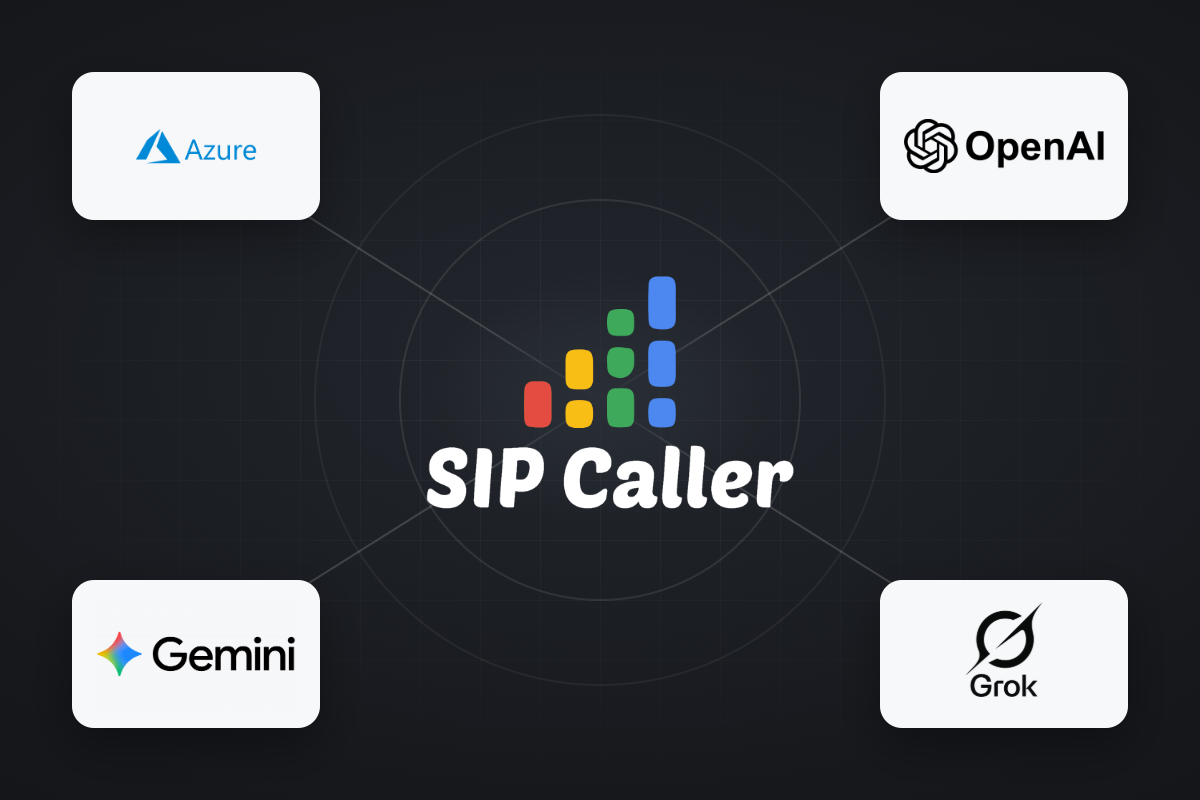
OpenAI and Grok are now available as AI Providers in SIP Caller, joining our existing support for Microsoft Azure AI and Google Gemini AI. Both new providers can power AI Conversational Agents and AI-Based Voicemail Detection across your outbound campaigns. With four AI providers to choose from, you can align SIP Caller with the AI provider agreements your company already relies on elsewhere, or simply pick the best option available on the market for your use case.