At SIP Caller, we continuously refine our platform to make outbound and inbound interactions more efficient, meaningful, and respectful of your customers’ time. Today, we’re happy to announce a small but impactful improvement to the Queues Monitor module, specifically focused on Queue Abandonment Callbacks.
While this enhancement may look subtle at first glance, it significantly improves the user experience and ensures callback campaigns only generate calls that truly make sense.
Queue Abandonment Callbacks are a powerful tool to reconnect with callers who couldn’t be attended to in time. However, in real-world scenarios, callers may:
Without smart handling, this can lead to:
We’ve improved the logic behind Queue Abandonment Callbacks to make them state-aware and customer-friendly.
Here’s how it works now:
To benefit from this enhanced behavior, users must update the Queues Monitor module installed in their PBX to:
This applies to Queues Monitor installations running on:
Once updated, the new behavior is automatically applied — no additional configuration is required.
This improvement ensures that:
In short, calls are only made when they add value.
This enhancement reinforces SIP Caller’s philosophy:
Every call should have a purpose.
By intelligently managing Queue Abandonment Callbacks, we help you reduce noise, optimize agent time, and deliver a better experience to your customers — without requiring changes to your existing callback configuration.
If you’re already using the Queues Monitor module, make sure you’re running version 2.0.1 or later to take advantage of this improvement. As always, we’d love to hear your feedback as we continue refining SIP Caller to support real-world contact center workflows.
Stay tuned for more updates!

Black lists and contact lists can now be fully managed through the SIP Caller REST API. You can create, edit, and delete lists, and add or remove their numbers and variable values, directly from your own systems. A new endpoint also loads every number from a contact list into a campaign with a single request. Keep opt-outs in sync with your CRM, refresh contact lists on a schedule, and provision new accounts end-to-end without a single manual step in the console.

This release brings three meaningful improvements to SIP Caller. The list of campaigns in the Dashboard, Campaigns menu, and Reports menu now shows a detailed status icon explaining exactly why an active campaign isn't making calls. Campaigns can now also be assigned a Priority (High, Normal, or Low), so your most important campaigns get access to calling capacity first. And thanks to internal architectural improvements, campaigns now start making calls within 5 seconds of activation, down from up to 30 seconds previously.
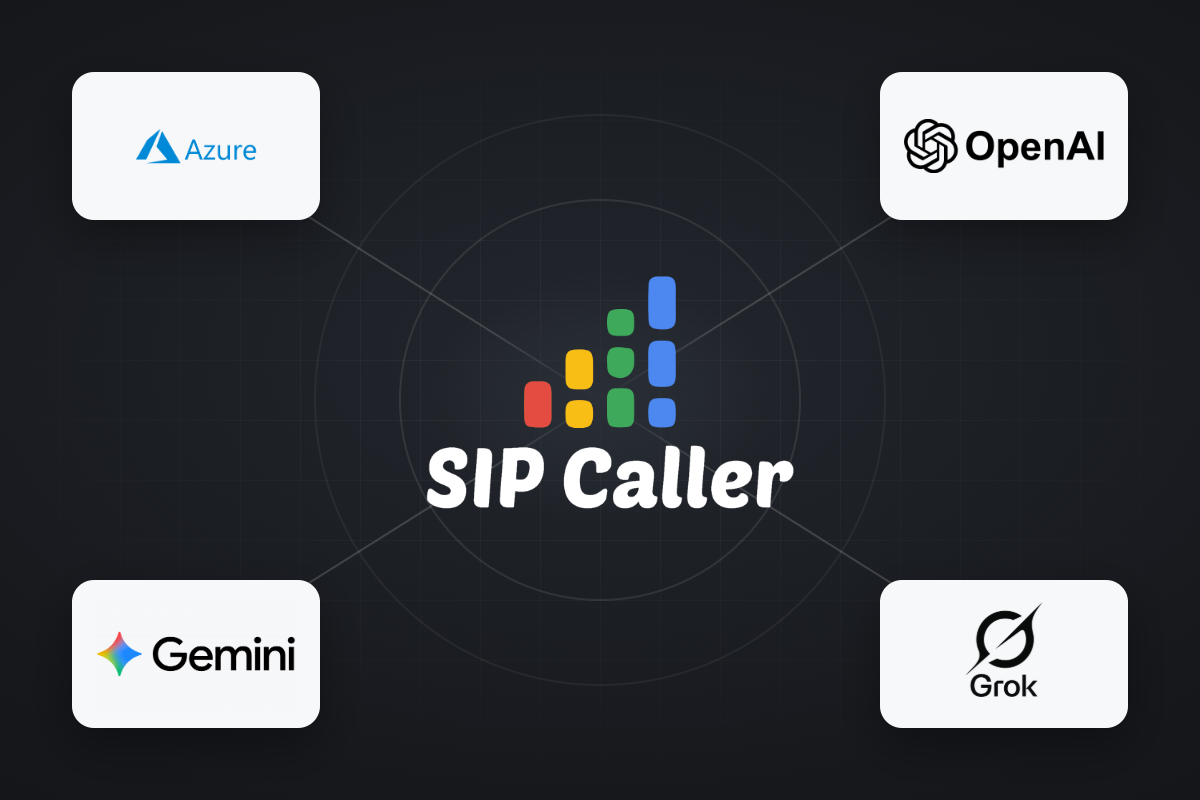
OpenAI and Grok are now available as AI Providers in SIP Caller, joining our existing support for Microsoft Azure AI and Google Gemini AI. Both new providers can power AI Conversational Agents and AI-Based Voicemail Detection across your outbound campaigns. With four AI providers to choose from, you can align SIP Caller with the AI provider agreements your company already relies on elsewhere, or simply pick the best option available on the market for your use case.